
The hash is not the art; it is merely the key. And this week, the key turned a lock that many thought was rusted shut. Circle's USDC added $2 billion to its market capitalization in a single week, leading all stablecoins in growth. The numbers are clean, almost sterile: $35 billion total, roughly 20% market share, a 6% weekly expansion. But beneath this arithmetic lies a structural signal that most market commentary will miss. This is not a story about technology. It is a story about how regulatory architecture has become the new moat in crypto—and how the industry's center of gravity is shifting from code to compliance.
The Context: A Stablecoin Landscape in Transition
Let us assume, for a moment, that stablecoins are the circulatory system of crypto. Every swap, every loan, every arbitrage trade depends on these dollar-denominated tokens moving value across chains and exchanges. For years, Tether's USDT has dominated this system, holding roughly 70% of the market with over $110 billion in circulation. Its first-mover advantage, deep liquidity pools, and dominance in non-US markets made it seem untouchable.
USDC has always been the challenger—the "compliant alternative" with monthly reserve attestations, a New York BitLicense, and backing from institutional heavyweights like BlackRock and Fidelity. But challengers don't usually overtake incumbents through superior technology. They do it through superior positioning. And that is precisely what we are witnessing.
The $2 billion weekly injection into USDC is not a random fluctuation. It represents real dollars flowing from traditional finance into the crypto ecosystem through a regulated on-ramp. When I see numbers like this, I don't ask "what happened this week?" I ask "what structural condition made this possible?" The answer, based on my years of auditing both code and market mechanics, is that we are witnessing the maturation of a two-tier stablecoin market: one for the unregulated frontier, and one for institutional capital that demands accountability.
The Core Analysis: Deconstructing the $2 Billion Signal
The growth is not technical; it is institutional. Let me be precise about what this means. USDC's architecture has not changed. There was no protocol upgrade, no new smart contract deployment, no novel consensus mechanism. The token remains what it has been since 2018: a fiat-collateralized stablecoin backed 1:1 by US dollars and short-term US Treasuries held in reserve. The technology is, frankly, boring. And that is precisely the point.
What changed is the demand side. A $2 billion weekly increase means that entities—likely institutional, given the scale—converted fiat currency into USDC through Circle's issuance mechanism. This is not secondary market buying; this is primary issuance. Someone handed Circle $2 billion and received USDC in return. The question that should occupy every analyst's mind is: who, and why?
Based on my experience modeling liquidity flows during the 2020 DeFi summer, I can tell you that capital movements of this magnitude rarely come from retail. They come from treasury desks, asset managers, and hedge funds reallocating capital. The pattern suggests that institutional investors are using USDC as their preferred vehicle for entering crypto positions—not because USDC offers better yields or superior technology, but because it offers something more valuable in the current regulatory climate: defensibility.
The compliance premium is now quantifiable. Consider the competitive dynamics. USDT still holds the liquidity crown, but its regulatory posture remains ambiguous. Tether has faced repeated questions about reserve transparency, and while it has weathered these storms, the reputational damage has created a persistent discount in institutional trust. USDC, by contrast, offers monthly attestations from top-tier accounting firms, a clear legal structure under NYDFS supervision, and a management team that has positioned itself as the "responsible" face of stablecoins.

This week's data suggests that the compliance premium is now translating into measurable market share. The $2 billion inflow is not just a number; it is a referendum on which stablecoin institutional capital trusts with their balance sheets.
The reserve mechanics deserve scrutiny. When a stablecoin issuer receives $2 billion in new issuance, that money must be deployed. Circle's stated policy is to hold reserves in cash and short-duration US Treasuries. With interest rates still elevated, this means Circle is likely earning meaningful yield on these new reserves. The revenue implications are significant: at current rates, an additional $2 billion in reserves could generate $80-100 million in annualized interest income. This is not a Ponzi structure—there is no new money paying old obligations—but it does create an interesting incentive dynamic. Circle profits from growing its reserve base, which aligns with its incentive to pursue institutional adoption aggressively.
The multi-chain strategy is quietly compounding. USDC's deployment across Ethereum, Solana, Arbitrum, and other networks means that the $2 billion inflow can be deployed across multiple ecosystems. This is not just about diversification; it is about positioning USDC as the default stablecoin for whatever chain gains traction next. Every new L1 or L2 that launches will likely integrate USDC first, given its regulatory clarity. This creates a flywheel effect that is difficult for competitors to disrupt.
The Contrarian Angle: The Blind Spots in the Growth Story
The hash is not the art; it is merely the key. But what if the key opens a door to a room we haven't inspected? Let me stress-test the narrative that this growth is unambiguously positive.
First, the centralization paradox. USDC's growth is predicated on Circle's ability to freeze assets, comply with sanctions, and respond to regulatory demands. This is a feature for institutional investors, but it is a bug for the crypto ethos. The same compliance infrastructure that attracts BlackRock also creates a single point of failure. If Circle's banking partners face stress—remember the Silicon Valley Bank incident in 2023—USDC could depeg faster than any algorithmic stablecoin. The $2 billion inflow increases systemic importance, which increases regulatory scrutiny, which increases the risk of politically motivated interventions.
Second, the growth source is opaque. The article reporting this data does not provide on-chain verification of whether the $2 billion came from new issuance or secondary market accumulation. If it is primary issuance, Circle's reserves grew correspondingly. If it is secondary market activity, the implications are different—it could signal migration from USDT rather than new capital entering the ecosystem. The distinction matters for understanding whether this is a zero-sum shift or a net-positive inflow.

Third, the USDT counterfactual. Tether's dominance in non-US markets remains formidable. In jurisdictions where US regulatory reach is limited or viewed with suspicion, USDT remains the preferred vehicle. The $2 billion USDC growth could be a US-centric phenomenon that does not translate globally. If the stablecoin market is bifurcating along regulatory lines—USDC for the West, USDT for the rest—then the competitive dynamics are more complex than simple market share math suggests.
Fourth, the regulatory sword cuts both ways. USDC's compliance advantage is also its vulnerability. If the US Congress passes stablecoin legislation that imposes stringent requirements, USDC is well-positioned. But if the regulatory pendulum swings toward restriction—limiting stablecoin issuance, requiring additional capital buffers, or imposing transaction limits—USDC would bear the brunt of compliance costs. The same regulatory clarity that attracts institutional capital could become a regulatory cage.
The Takeaway: What This Means for the Market
The hash is not the art; it is merely the key. And the key is turning in a lock that leads to a new phase of crypto adoption. The $2 billion USDC growth is not a technical story; it is a trust story. It signals that institutional capital has found a vehicle it can defend to its own compliance departments, its own boards, and its own regulators. This is the beginning of a structural shift, not a weekly blip.
For developers and protocol designers, the implication is clear: the competitive advantage in stablecoins is no longer about clever code or yield optimization. It is about regulatory architecture, banking relationships, and institutional trust. The teams that understand this will build for compliance-first adoption. The teams that ignore it will find themselves relegated to the unregulated frontier.
For investors, the signal is more subtle. USDC's growth suggests that institutional capital is entering the crypto ecosystem through compliant channels. This is a positive liquidity signal for the broader market. But it also means that the market is becoming more correlated with traditional finance—and more exposed to its risk vectors.
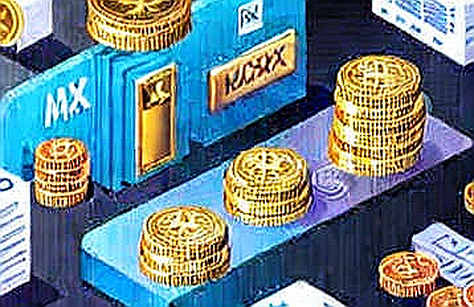
The question I keep returning to is not whether USDC will continue to grow. It is whether the crypto ecosystem can maintain its innovative edge while becoming increasingly dependent on regulated intermediaries. The hash is not the art; it is merely the key. But the door it opens leads to a future where the art might be painted by institutions, not by anonymous developers. And that is a picture worth examining carefully.
The $2 billion is not the story. The structural shift it represents is. Watch the weekly numbers, but more importantly, watch who is moving the capital and why. The answer will tell you more about the future of crypto than any price chart ever could.